During the Enlightenment era, religious and spiritual beliefs became replaced by a faith in scientific progress, and with it, a philosophical focus on the importance of free will and liberty. Nietzsche pronounced the end of religion, and the death of God, symbolising not just the end of religious beliefs, but a dramatic change to the morality of the system altogether.
Yet, even then there were contradictions between scientific reasoning ad the belief in free will. Recently, certain scientific findings have been discovered that challenge the notion of free will altogether. Strangely, this research seems to support ancient Vedic and Buddhist ideas that remain largely ignored in Western philosophy, yet an analysis of these ideas gives a more accurate explanation to research into free will than the current paradigm.
The Enlightenment era supposedly marked an age of rationality, overcoming dogma and tradition. The belief in self-determination influenced the development of the voting system, with the assumption that the individual should be free to assess the available information and make a rational choice. There was also great emphasis on the role of the scientific method. By encouraging society to act as free and rational citizens, rather than mindlessly following the rule of God, it was believed a better system could be created.
Yet, despite a belief in self-determination, philosophers of the time were beginning to question the existence of free will. Leibniz (1646-1716) made one of the first functionalist analogies of human behaviour. If one was to walk into a mill, the would see each part of the mill working, but only when made to do so. The human body is the same. An action cannot happen without a cause, a neuron cannot fire without a trigger. The laws of physics leave no room for free will, which would rely on a causeless event. All actions happen because of a previous action.
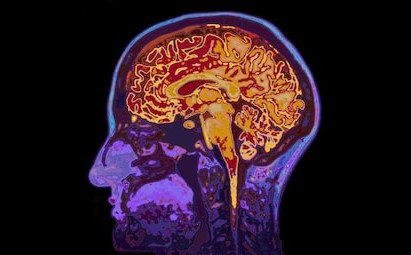
Now, hundreds of years later, research seems to extinguish any notion of free will. Libet (1999) asked his participants to stop a clock at any time of their liking. Electroencephalograms (EEG) scans showed that 300ms before a participant vocalised their decision to act, their body was already preparing to make the decision. This Readiness Potential (RP) demonstrates that rather than our thoughts and decisions being formed through free will, they are influenced by prior events. In other words, we have no volition over our actions, as they are predetermined. Wegner (2003) demonstrated how we make a false connection between our intentions to act and the actions themselves, inferring the existence of free will. Through the manipulation of different variables, such as how congruent an action was with an intention, and by eliminating other possible causes of the action, Wegner managed to fool participants into believing they had caused an action they had not. The implication here is that what we call “free will” is actually a long chain of cause and effect that we in fact have no control over, we just passively observe, making the assumption we can control it.
Buddhism has long discussed the illusion of self, of free will. Karma is an often misunderstood term. The Mahayana Buddhist view of Karma literally means “action”, and especially those that represent intention. Yet, it is recognised that all thoughts, decisions and intentions are the result of prior events, and shall go on to influence future events. This is the Karmic Cycle.
The idea of Samskara can help us understand this idea. In many Indian philosophies, Samskara is the idea that our actions leave imprints within our mind, that determine our future impulses and ultimately our behaviour. Humans can become stuck in cycles of behaviour that have a negative impact on our lives. When stuck in such a cycle, an individual can be fully aware that their behaviours are damaging to themselves, and express the desire to stop, yet continue the behaviour. An obvious example is addiction, but it is a rule that can influence any aspect of our lives. The answer to breaking these cycles is simple. Before we can change our intentions, we must first free ourselves from the influence of prior events. This can achieved through meditation. By being aware of the current moment, we begin to notice a flood of thoughts and feelings rush through our minds that previously lay dormant. The act of stopping, of inaction, allows us to take a step back from these cycles, and return with a better understanding of ourselves, reflecting on those events and impulses that drive our behaviour.
This is in-line with current scientific understandings of free will. Libet’s study demonstrated that whilst we may not have volition over what impulses we have, we are able to decide whether or not to act on such impulses. In other words, we have free won’t.
-Scientific research into RP
-Free won’t, Meditation, ability to stop
-Karmic cycles, Samskara
-Impulsive behaviour, definition of free will
-controlling ppl
-panpsychism, anatman
-Could machines be conscious
-meme theory, archetypes and collective conscious?
Science and Samskara (unfinished)
 The Monkey and The Machine